Media Contact: Megan Manning
manningm@ash.org
Read Daily COP11 Briefs from ASH>
Overview
COP is where global tobacco policy is negotiated, written, and monitored and where consensus is achieved on how to tackle the tobacco industry and advance health.
In 2005, the WHO Framework Convention on Tobacco Control (FCTC) entered into force, becoming a legally binding treaty that has now been joined by more than 180 countries. Representing over 90% of the world’s population, the FCTC is one of the most widely embraced treaties in history. Parties to the FCTC meet at COP every two years. It is like a global parliament for tobacco policy.
The negotiations of the FCTC are what normalized smoke-free policies around the world, the banning of tobacco advertising, the introduction of plain packaging of tobacco products, and the need to protect public health policies from tobacco industry interference.
FCTC COP11 Priorities | November 17 – 22, 2025
Countries that have joined the FCTC (i.e. Parties) have the opportunity to set in motion groundbreaking public health progress through key decisions.
The full agenda and main documents are available here>
At COP11, ASH is calling for concrete steps toward the tobacco endgame—policies that fast-track the end of the tobacco epidemic and safeguard health and the environment:
Forward-looking tobacco control measures (in relation to Article 2.1)
This will cover what advocates call “tobacco endgame” policies. A COP Expert Group published a report in September 2025 with a menu of policy options for COP11 to consider to accelerate the end of the tobacco epidemic, like sales bans, nicotine reduction, and rising age to purchase restrictions. These are policies that go beyond the minimum obligations in the FCTC.
Liability (Article 19)
The COP will discuss the use of litigation – including criminal liability – against the tobacco industry as a tool advance public health.
Protection of the environment and the health of persons (Article 18)
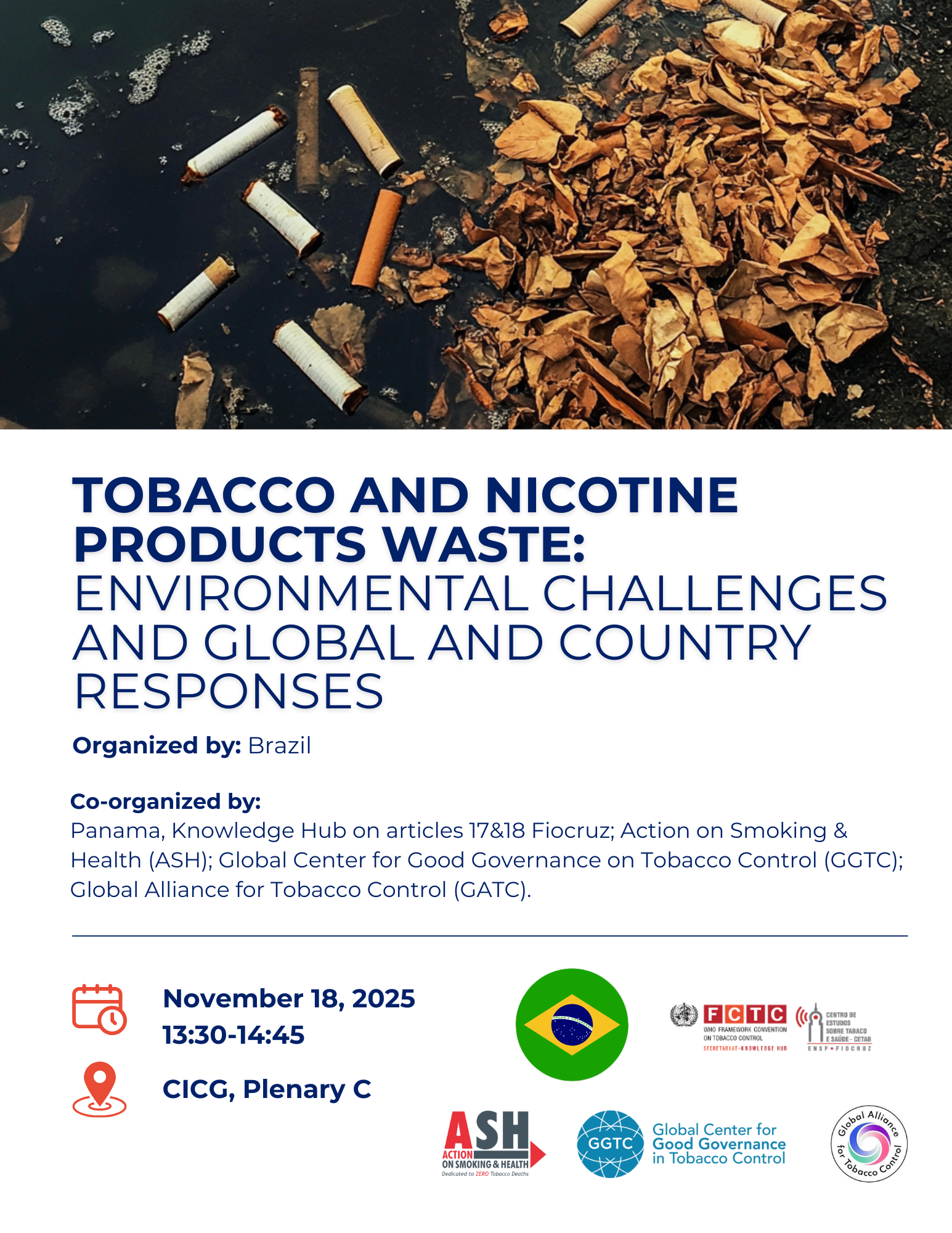
After the failure of the most recent round of negotiations for the UN treaty to end plastic pollution, the COP will consider a decision urging Parties to ban cigarette filters and other tobacco product waste.
Human Rights
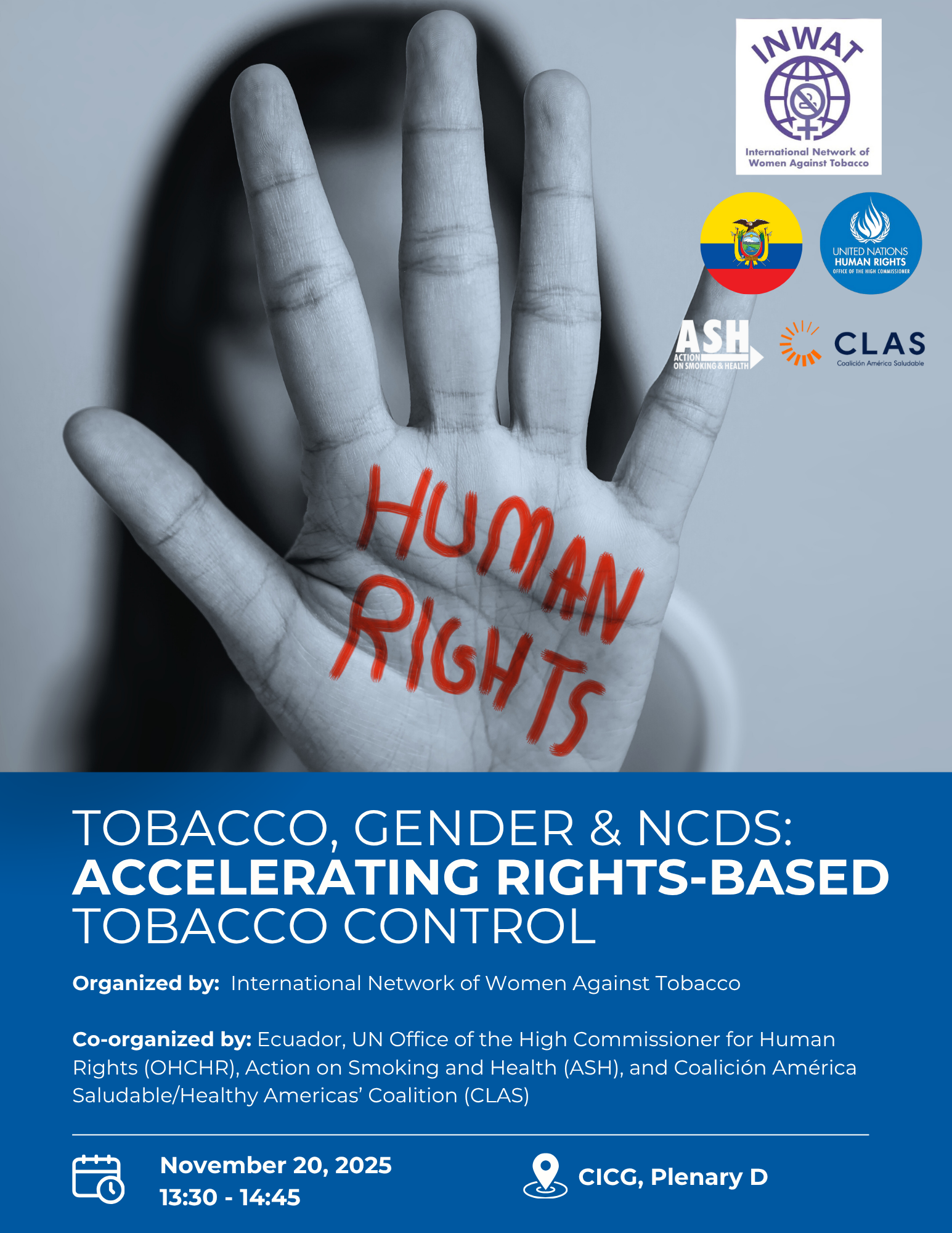
One of ASH’s key priorities is to ensure that human rights norms and language are integrated throughout the COP and in COP Decisions, furthering the Decision from COP 10.
Read more in BMJ Tobacco Control: Tobacco control advocates as human rights defenders: a call for recognition
Side Events
ASH is co-hosting or participating in numerous side events at COP11 including:
Tuesday,18 Nov. 202513:30 – 14:45Room 14 |
|
Tuesday,18 Nov. 202513:30 – 14:45Plenary C |
|
Thursday,20 Nov. 202513:30 – 14:45Plenary D |
|
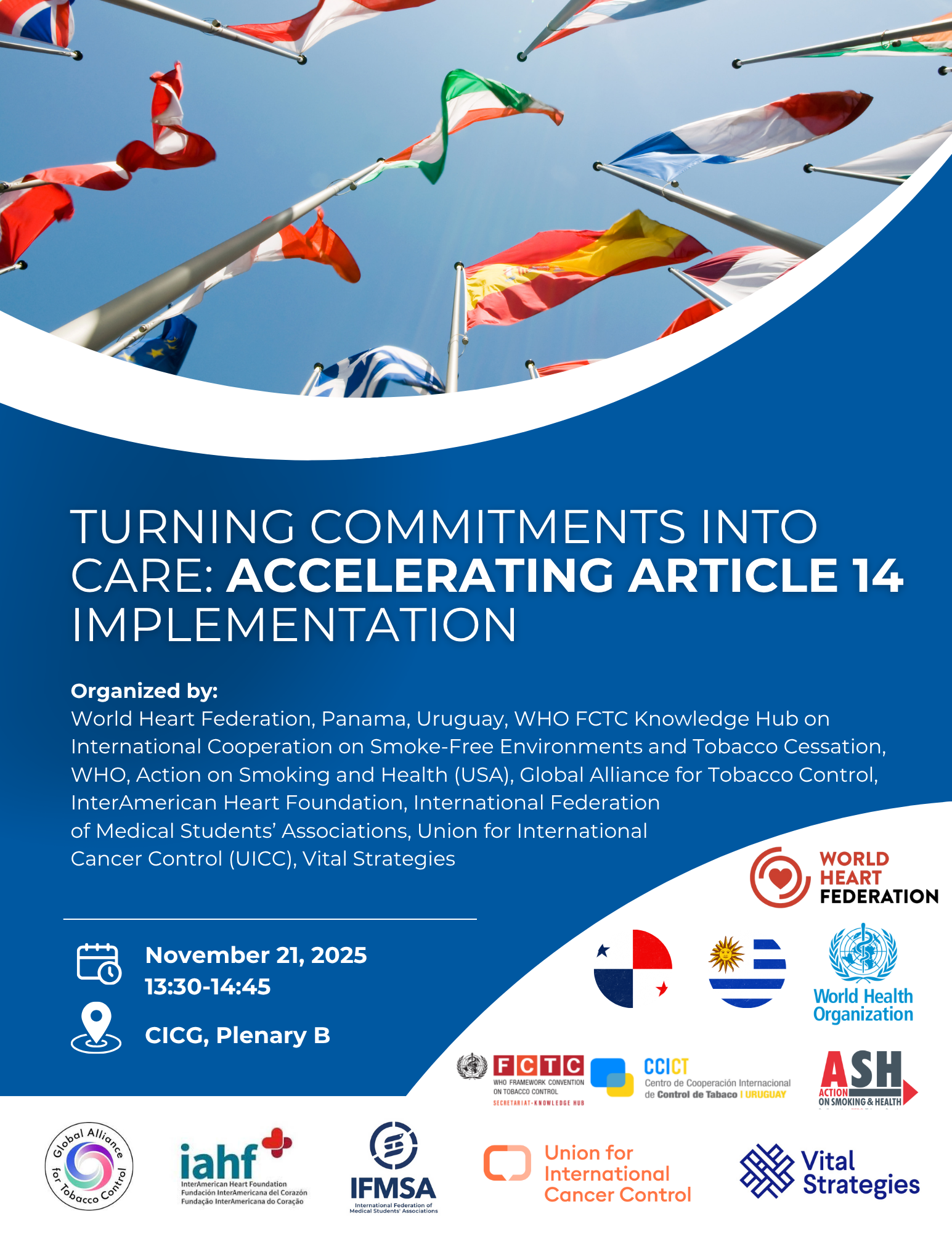
Friday,21 Nov. 202513:30 – 14:45Plenary B |
|