Is a future where no one dies because of commercial tobacco products within our reach?
Yes! What once seemed like an impossible goal is now within our reach. 2025 has taken us several steps closer to this goal, and ASH is proud to have been a leader in realizing this new paradigm, to finally apply a regulatory response to tobacco products that is proportionate to the harm these products cause.
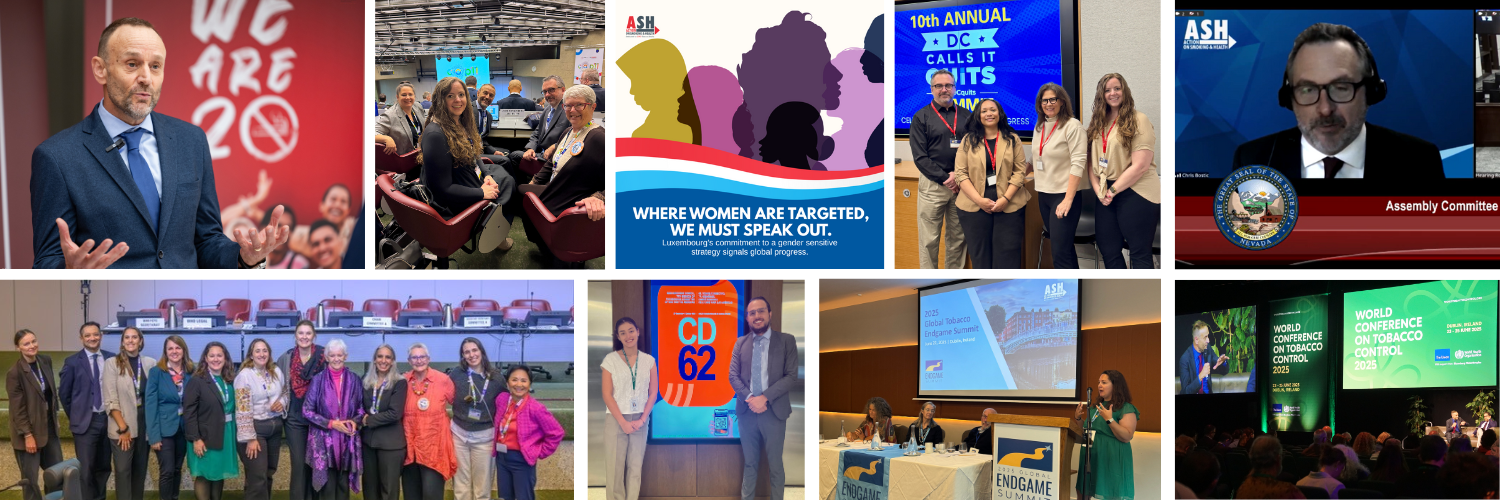
This year, ASH held two Tobacco Endgame Summits around the margins of the World Conference on Tobacco Control (Global Summit Recap here) and the US National Conference on Tobacco or Health (US Summit Recap here). These meetings, attended by representatives from governments, UN agencies, academia and civil society, marked a major shift within the public health community. The question from health leaders around the world has changed from “is tobacco endgame feasible or possible?” to “how fast can we get there and what do we need to do to accelerate progress towards a tobacco endgame future?”
As of today, 31 jurisdictions in the U.S. and around the world have put measures in place to phase out the sale of tobacco products. In the U.S., communities in California and Massachusetts have implemented immediate and phased in tobacco sales bans. And countries around the world are also taking action, like the Maldives implementation of a Generational Sales Ban that will not allow anyone born after 2007 to be sold tobacco products. A generational sales ban is also being considered in the United Kingdom Tobacco and Vapes Bill and in other revisions of tobacco bills in countries around the world.
This progress was supported by the inclusion of “tobacco endgame” as a central topic in the agenda of the 11th Conference of the Parties of the WHO Framework Convention on Tobacco Control (FCTC), the global tobacco treaty joined by 182 countries and the European Union. A key report on forward looking measures to reduce tobacco use was developed and presented at this important global treaty negotiation, providing guidance to governments around the world who are interested in taking more steps to protect their citizens from the harms caused by an industry that sells a product that kills more than half of its consumers when used as intended.
ASH is proud and honored to have been actively involved in all the FCTC and COP 11 processes that will help make progress towards a healthier world through the use of liability, human rights and environmental mechanisms to accelerate progress towards a tobacco free future.
To increase momentum towards this healthier world, ASH continued in 2025 to build the capacity of partners to engage in tobacco endgame campaigns through our Tobacco Endgame Training Course, our endgame resource center, and numerous webinars, factsheets, and many other activities.
A clear and resounding appeal has been made by our public health partners, colleagues and allies around the world: “a future where harmful tobacco products no longer flood the market is now within reach. But please help us overcome our main challenges and obstacles to reach this goal.” And the 3 key areas where they ask for assistance have not changed:
1. Partners call for help in addressing tobacco industry interference in policy making and help in defending against industry litigation when measures to end the tobacco epidemic are implemented.
2. Partners call for trainings and expertise in the area of tobacco endgame policy, communication and other skills needed to accelerate national progress towards tobacco endgame measures.
3. And lastly, an existential challenge for the health community is facing the wealthy tobacco industry while resources in the field of “tobacco control” are dwindling, in part because of the perception that the tobacco problem has been solved.
What will it take to replicate progress from the numerous communities implementing measures to remove commercial tobacco products out of the market?
Clearly the passion and vision are there, but resources to make it happen are truly the major barrier.
According to available estimates, while tobacco is the leading cause of preventable death worldwide, killing more than 7 million per year, only a tiny fraction of development funding goes to addressing tobacco control, with one estimate suggesting that 0.16% of international development assistance for health goes to address tobacco. If a threat to human health of similar magnitude appeared today, it would likely initiate a global, well-resourced response to address it.
When it comes to tobacco, we have the tools and solutions – the FCTC measures have been recognized as policy “best buys” by the World Bank and the measures proposed in the COP11 expert group report on Forward-looking tobacco control measures welcomed in November 2025. These solutions are strongly supported by the general public.
With your help, we can strengthen the capacity of our partners around the world to accelerate progress towards our vision “a world free from the harm caused by tobacco” in 2026.
Please make a generous, tax-deductible donation today, to be matched up to $37,000 if received by December 31, 2025. Thank you for your continued support!