Tobacco is an economic threat to individuals, countries and the world.
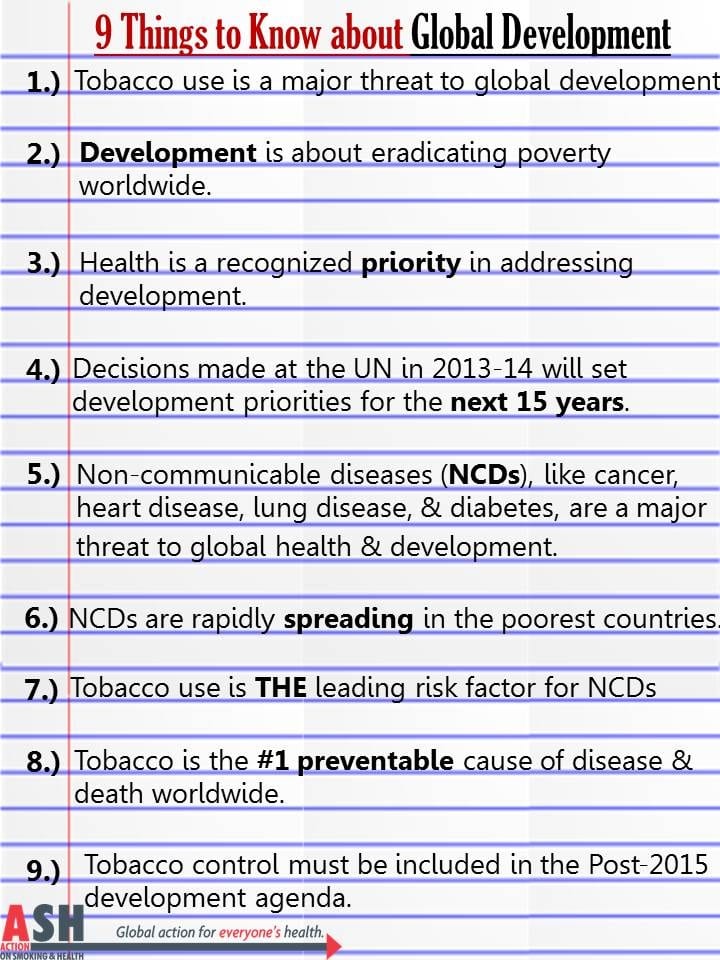
Tobacco use is a major driver of poverty, depriving the world of between 1-2% of its GDP annually.
Tobacco use is higher among the poor. Their addiction to nicotine drives them to spend a relatively large proportion of their income on tobacco that cannot be spent on basic human needs such as food, shelter, education, and health care. This trend coupled with the high cost associated with dealing with tobacco-related diseases deprives poor families of much needed income. In the case of the poorest—where a significant portion of their meager income is required to buy food—expenditures on tobacco can mean the difference between an adequate diet and malnutrition.
The poor continue to lose while tobacco companies reap enormous profits from year to year—and while they have an explicit strategy to increase sales in the poorest parts of the world.
For this reason, policies and interventions focusing on smoking prevention among the poor are a key component of national and international efforts to improve the wellbeing of less affluent populations.
In 2015, the world agreed to a new blueprint for development. The United Nations adopted the Sustainable Development Goals (SDGs) as the guide to improving the lives of the world’s people, and the Earth itself, from 2016 to 2030. The SDGs replace the Millennium Development Goals which were expiring after making major strides in the fight against global poverty. Despite criticisms of the updated goals, the SDGs are a major accomplishment.
Addressing tobacco is a proven approach, with built-in revenue, to help governments achieve the SDGs.
Both NCDs and FCTC implementation are included in the SDGs (see picture). SDG 3 (the ‘health goal’) aspires to: Ensure healthy lives and promote well-being for all at all ages. Target 3.4 of SDG 3 is: by 2030 reduce by one-third pre-mature mortality from non-communicable diseases (NCDs) through prevention and treatment, and promote mental health and wellbeing. And target 3.a is: strengthen implementation of the Framework Convention on Tobacco Control in all countries as appropriate.
Tobacco use kills and impacts more people in low-income countries than rich countries; therefore it impedes progress towards reducing poverty. The world must take steps to ensure that tobacco use is no longer an impediment to global development.
Helpful Related Links:
Why A UN Financing Conference Should Matter to You
A Development Challenge the World Can Overcome
Background Information on Post-2015 Process
ASH: Tobacco A Barrier to Sustainable Development
WHO Publication. The MDGs and Tobacco Control (PDF)
UN Millennium Development Goals >