ASH’s work is based on the principle that the actions of the tobacco industry – producing, marketing, and selling addictive products that kill when use as intended – violate human rights, for example the right to health.
 As such, ASH focuses on 4 key areas of work:
(1) Phasing out the sale of commercial tobacco products,
(2) Using the law to hold the tobacco industry accountable,
(3) Using a human rights approach to advance anti-tobacco policies, and
(4) Promoting and strengthening global best practices to reduce tobacco use, like the WHO Framework Convention on Tobacco Control (FCTC), the UN Plastics Treaty, and more.
Combined, these programs aim to eliminate the tobacco industry and end the tobacco epidemic.
Below, we celebrate our key successes in each program in 2025.
Project Sunset: Phasing out the sale of commercial tobacco products
ASH’s Project Sunset initiative accelerated the global and U.S. shift toward phasing out commercial tobacco sales by turning advocacy into concrete policy change.
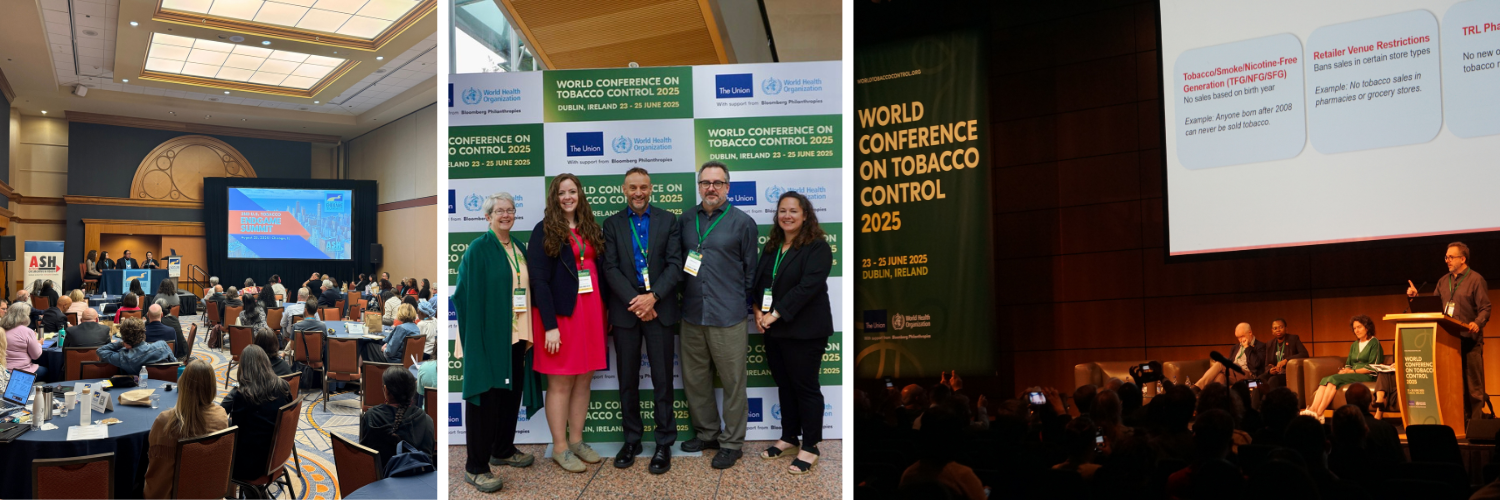
Internationally, ASH convened the first Global Tobacco Endgame Summit, galvanizing collaboration among advocates, researchers, and policymakers from more than 25 countries, informing legislative debates from South Australia to India, and helping secure landmark progress such as the Maldives’ Tobacco-Free Generation law. ASH’s technical assistance and leadership within global alliances strengthened forward-looking measures under the FCTC and advanced endgame progress in the European Union.
In the United States, ASH hosted the second U.S. Tobacco Endgame Summit, bringing together more than 150 participants to coordinate and expand endgame strategies nationwide. In addition, ASH continued to train advocates, policymakers, and researchers through its Tobacco Endgame Policy and Advocacy Course with quarterly live discussions.
ASH’s rapid-response technical assistance and testimony supported the passage of multiple local endgame policies—including Nicotine-Free Generation laws in 10 Massachusetts cities, retail phase-outs in Minnesota, comprehensive tobacco sales bans in 2 California cities, and cigarette filter bans that triggered a countywide law—while strengthening state-level efforts in Massachusetts and Nevada. At the federal level, ASH mobilized broad national support for the FDA’s proposed nicotine reduction rule.
Together, these actions moved endgame policy from vision to implementation, delivering measurable progress toward a tobacco-free future.
Using the law to hold the tobacco industry accountable for the harm they cause
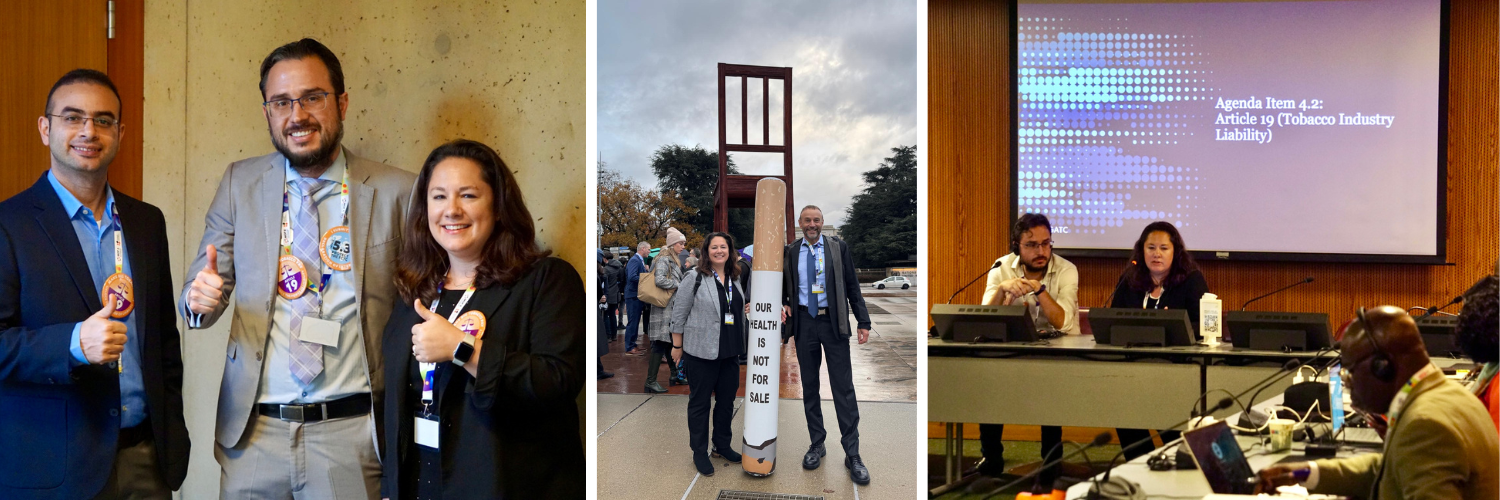
ASH advanced global tobacco accountability by translating advocacy and thought leadership into concrete policy outcomes. By co-chairing the Article 19 working group of the Global Alliance for Tobacco Control in the lead-up to FCTC COP11, ASH helped secure a pivotal decision strengthening the role of liability as a forward-looking tool to hold the tobacco industry accountable for the harms it causes. ASH also elevated tobacco as a social justice issue on the global stage by presenting at the 2025 World Conference on Tobacco Control in Dublin, highlighting litigation against the US Food and Drug Administration for its delay in removing menthol in tobacco products and reinforcing the link between regulatory action, accountability, and the protection of communities disproportionately harmed by tobacco use.
Using global norms to move local communities toward zero tobacco-use prevalence
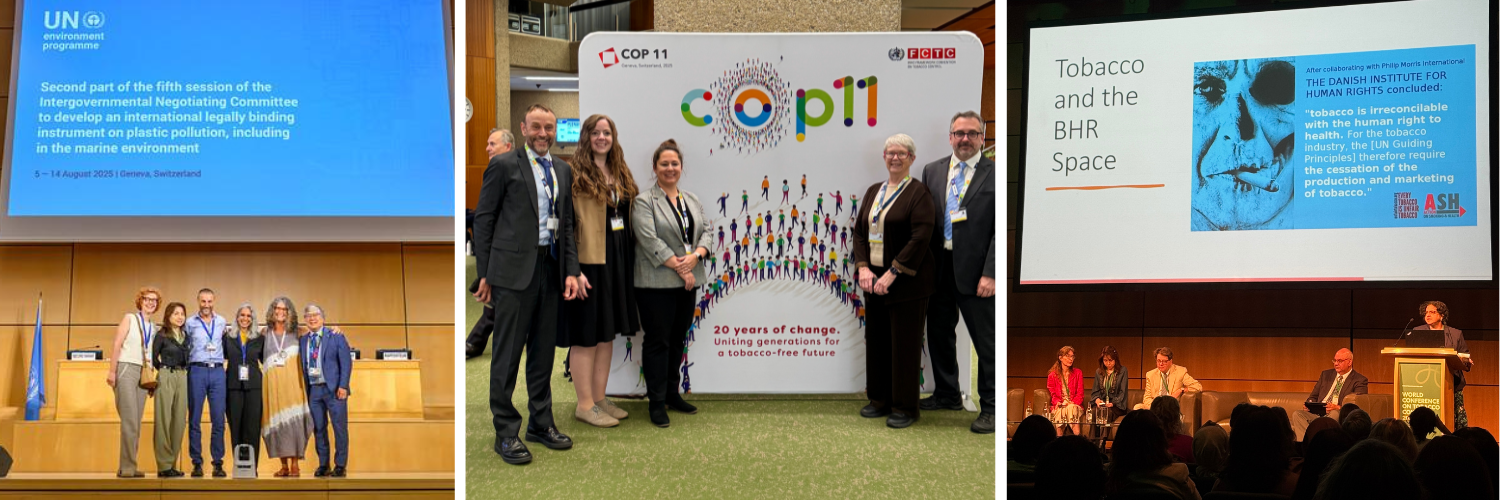
ASH leveraged global treaties, human rights mechanisms, and tobacco industry monitoring and accountability to drive progress toward zero tobacco-use prevalence at the local and national levels.
Through its leadership at FCTC COP11, ASH helped shape multiple landmark decisions on forward-looking measures, environmental protection, and industry liability, while also serving as an expert reviewer and communications partner—ensuring these global norms translated into stronger, enforceable tobacco policies worldwide.
Beyond the FCTC, ASH elevated tobacco as an environmental and human rights issue by coordinating tobacco policy advocacy at the UN Plastics Treaty negotiations to advance a global ban on cigarette filters, and by securing explicit recognition of tobacco harms in UN human rights bodies, including CEDAW’s concluding observations to Luxembourg and reviews by the Committee on the Rights of the Child.
ASH further accelerated accountability by documenting rising tobacco industry interference in the United States, through the 2025 US Tobacco Lobbyist and Lobbying Firm Registration Tracker and the 2025 US Tobacco Industry Interference Index. The Tracker and US Index equip advocates with data and policy solutions to counter tobacco industry influence. ASH also supported DC Tobacco-Free Coalition-led action at the local level.
Through sustained engagement with WHO, PAHO, ECOSOC, and global civil society alliances, ASH transformed international policy frameworks into practical tools that empower communities and governments to advance toward a tobacco-free future.
Accelerating Policy Change Through Strategic Communications
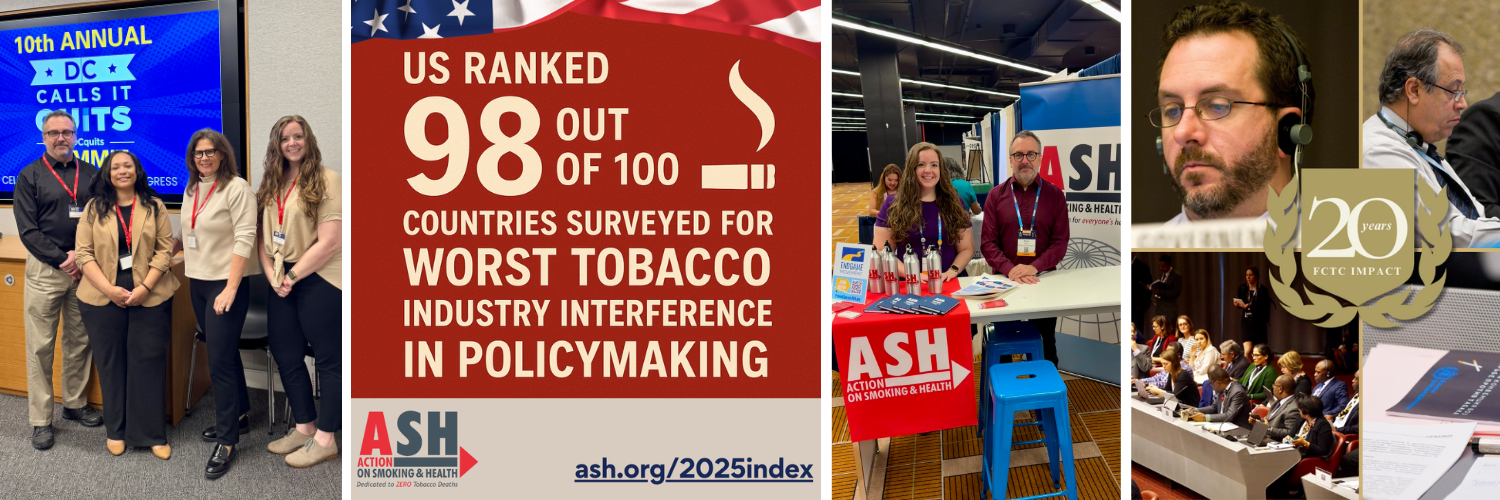
In 2025, ASH amplified its advocacy impact through an extraordinary volume of strategic communications and thought leadership that extended far beyond the size of its small team, shaping policy debates worldwide.
ASH produced 12 press statements, 12 global advocacy campaigns, 54 educational and advocacy blogs, 12 global webinars, and 10 key publications, ensuring sustained visibility and influence across media, policymaking, and civil society.
This work positioned ASH as a trusted authority in high-profile outlets including CNN, Bloomberg News, The Christian Science Monitor, MedPage Today, and The Hill, while elevating critical issues such as nicotine reduction, menthol regulation, tobacco endgame policies, environmental accountability, and tobacco industry interference.
By translating complex global treaty negotiations, human rights victories, and tobacco industry data into accessible, action-oriented content, ASH mobilized advocates, informed policymakers, and reinforced accountability at local, national, and international levels.
Collectively, this high-impact output enabled a small team to drive outsized influence—accelerating groundbreaking tobacco policies and strengthening global momentum toward ending the tobacco epidemic.
You play a critical role in our success too. Without your support, much of this wouldn’t be possible.
Please make a generous donation today, to be DOUBLED until December 31st, to bolster our work.