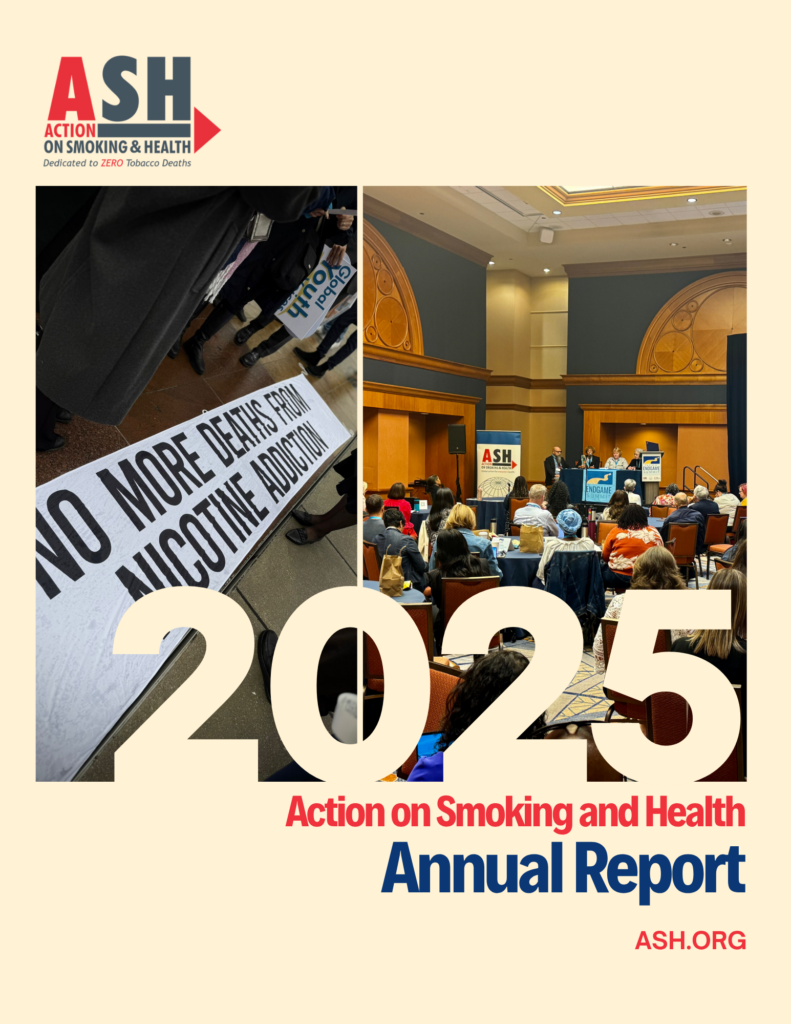
ASH is proud of what our small team accomplished in 2025, but we are even more determined by what remains to be done.
This year, we helped secure landmark decisions under the World Health Organization Framework Convention on Tobacco Control (FCTC), strengthened global use of liability to hold the tobacco industry accountable, advanced environmental protections tied to cigarette filter pollution, and elevated tobacco as a human rights issue before UN bodies. We supported endgame policies at the local and national levels, mobilized support for bold federal measures, and exposed tobacco industry interference through rigorous tracking and analysis. Our communications reached global audiences and shaped debates in major media and policymaking forums.
These are not incremental steps. They are structural shifts that move the world closer to phasing out commercial tobacco sales and embedding accountability into law.
And yet, tobacco remains the leading cause of preventable death worldwide. Tobacco industry interference persists. Regulatory delays cost lives. Population growth threatens to outpace reductions in prevalence. The scale of the tobacco epidemic demands urgency equal to our ambition.
What distinguishes ASH is our clarity of purpose.
We are not managing the tobacco epidemic—we are working to end it. Our human rights–based approach recognizes that the ultimate expression of the right to health is eliminating the commercial sale of the most lethal consumer product ever made. Our endgame strategy is no longer theoretical; it is being implemented. Our accountability framework is no longer aspirational; it is shaping global norms.
But progress at this scale requires sustained, independent civil society leadership. Governments shift. Political winds change. Tobacco industry tactics evolve. ASH remains steady, focused, strategic, and relentless.
If we are to accelerate the end of the tobacco epidemic, we need partners who believe that ZERO tobacco deaths is not an abstract ideal, but an achievable goal.
Your support fuels treaty advocacy, strengthens local reforms, exposes industry interference, and transforms bold ideas into enforceable policy. It enables a small, expert team to continue delivering outsized global impact.